
Showing posts with label Irish Nationalists. Show all posts
Showing posts with label Irish Nationalists. Show all posts
Wednesday, 28 February 2018

Friday, 23 December 2016
Answers to the “England is too big” to have its own Parliament argument
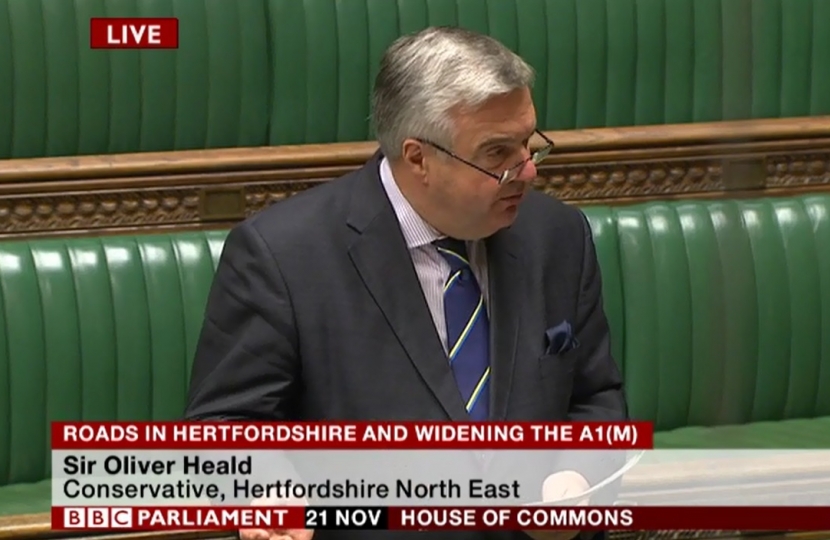
Answers to the “England is too big” to have its own Parliament argument
I have recently been hearing of several Tory MPs who have been doing the rounds making arguments against an English Parliament.
One of those is Sir Oliver Heald MP, who recently spoke at a meeting of Oxfordshire Conservatives, in which he claimed the reason why England could not have its Parliament and Government like the Scottish, Welsh and Northern Irish ones was because England is too big at 85% of the population of the United Kingdom. According to him the provision of an English Parliament would apparently lead to the breakup of the Union because Federal States cannot survive where one part of the State is 85% of the Federation.
On hearing this I immediately responded that first of all one of the things that Federal States always do is have measures in place to balance out the dominance of their larger States. So for example in the United States, California is by far the most heavily populated US State and also the richest. However it only has two Senators, just like Oklahoma in the Federal Congress.
It is also the case that Oliver Heald’s argument does not hold water in terms of history.
The reason the Soviet Union collapsed was not because Russia was “too big”. The USSR collapsed because the Soviet system had become economically bankrupt, partly as a result of the Soviet defeat in war in Afghanistan, but also partly because of the attempt to match American defence spending with regard to Reagan’s “star wars”.
Equally Austro-Hungary did not collapse because Austria was “too big”, it collapsed because Austro-Hungary was defeated in war (also because of the idiocy of Woodrow Wilson’s refusal to negotiate with multi-national states!).
As Oliver Heald’s suggestion as to how to cope with England being “too big” is to split up England into “Regions” of one sort or another (the latest being “City Regions”), my response to him, and any of his ilk, is that any question to which the answer is to split England up is the wrong question.
If the choice is between splitting England up or splitting up the United Kingdom, I have no hesitation in demanding that the split is that of the vastly overrated, expensive, grandiose and laughably decadent United Kingdom.
When it was suggested, before the First World War, that Ireland should have Home Rule and the then Liberal Government forced through Home Rule legislation, Tory troublemakers stirred up Ulster with cries of “Ulster will fight and Ulster will be right”. How much more justification would we English have to fight if the cry was to split England up? Perhaps we should have a cry that “England will fight and England will be right”?
I mention the bloody history of Irish Independence intentionally because unthinking Tory unionists like Oliver Heald MP need to remember that it was Tory intransigence and the refusal to grant the reasonable request for a devolved Irish Parliament and instead the call for Ireland to be split which led not only to the bloodshed of the struggle for Independence but the still worse Civil War. This has stained Irish politics with blood ever since.
The idea that patriotic Englishmen and Englishwomen will not only indefinitely allow England not to have its own proper voice of political expression but also quietly sit by whilst over a thousand years of English history is discarded and England is broken up, is simply crazy. In fact it is not only crazy but it is utterly irresponsible!
Wednesday, 15 April 2015
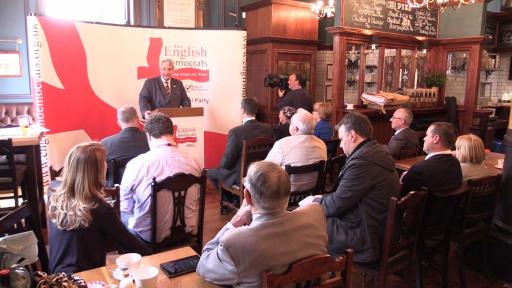
Our General Election Press Launch – Even Sky News came too!
Our General Election Press Launch – Even Sky News came too!
As I mentioned in my previous Blog item, over the years we have tried hard to get our press launch covered.This has always previously been a struggle but this year we did get some interest, both from ITV and, in particular, from Sky, who actually sent a reporter.
We were briefly on the Sky News and also a more detailed report was done for Sky’s website. Here is a link to the article, click here >>> Coalition With Nationalists 'Would Be Treason'
The text is slightly off what I said because I wasn’t accusing Scottish and Welsh Nationalists of being traitors to their countries, but my point was focussed more on Ed Miliband and the Labour leadership.
But leaving that aside, I think the Sky reporter has done a good job.
What do you think?
Friday, 4 January 2013
"NATIONAL IDENTITY" IN ENGLAND ANALYSED - THE 2011 CENSUS

The Office for National Statistics gathered a total of 53,012,468 responses in England (which is officially defined as the 39 traditional counties - thus not including Monmouthshire).
As anyone would know who completed the Census form, the Census collected statistics for a great many types of information.
One which of political interest is “National Identity”, which is the self-identification of a person’s nationality by which nation they adhere to.
The Census also collected statistics on what they described as “Ethnicity”, which included "White British". This is not a category which is legally recognised under the Equality legislation.
"Ethnicity" under Equality law means a sub-category. The leading example of "Ethnicity" being that Sikhs which were found by the House of Lords to be a sub-category of the North Indian racial group.
However in the 2011 Census, "Ethnicity" was in effect treated as the legal concept of a racial group and as a result 42,279,236 respondents stated that they were “White British” (79.8%). After adding in “Irish” and the “White Other” categories to the white category there is left over the 15% of the respondents to the Census who were apparently “non-white”.
In considering these results I think it is important to bear in mind that whilst it was legally required to fill in and return the Census form, it is highly probable that recent immigrants and the generally non-settled population, together with illegal immigrants, would be, statistically, very likely not to complete the form. The statistics therefore will underplay the extent of immigration.
Turning however to the issue of National Identity which is what will be politically significant in the growth of political English Nationalism, the statistics were that those who stated their "National Identity" to be “English Only” were 32,007,983 (60.4%); “English and British” were 4,820,818 (9.1%); no English element of national identity 15,834,059 (29.9%); Welsh identity 409,582; Scottish identity 555,171; Northern Irish 142,683; those that claimed "British Only" national identity 10,171,834 (19.2%); Irish identity 376,866; “Other identities” 4,921,225 (8.3%).
As a curiosity, in the duchy of Cornwall, those that claimed Cornish only national identity were just 58,969 (9.9% of the population of Cornwall). Is this a result which leaves Cornish nationalism holed below the waterline?
So, in round terms, 32 million people living in England consider themselves to be "Only English", whereas 15 million consider themselves to be "English and British" or "British Only".
The potential core vote for English nationalism therefore is that 32 million or 60.4% of the population in England.
The potential swing voters are those that consider themselves to be "English and British" that is 4,800,000 people (9.1%).
The "British Only" and "Other" national identities which combined is only 15.8 million people (29.9%) are likely to be the core opposition to any political agenda of "Englishness".
In considering how politically significant these statistics may be we should bear in mind the fact that Tony Blair won his last landslide General Election victory with the votes of just 21.6% of the electorate.
If English Nationalism could galvanise to vote for English Nationalism even only half of those that consider themselves to be “English Only”, then English Nationalists would not merely be elected they would be in government.
Another point of interest is that already in England those that identity themselves in anyway as being British appear to represent less than 30% of the population. It would appear therefore that any party basing its appeal on British Nationalism is competing for support in a “declining market” and one also in which there is a significant proportion of “Non White” voters.
As we know in Scotland and Wales the decline of Britishness is even more dramatic. It follows that, in the longer term, the future is bleak for political britishness.
It should surprise no-one that the more astute amongst the British Establishment Political Class are already picking up on the importance of this change in national identity in England - even Ed Miliband is making noises about being supportive of English national identity!
The challenge for English nationalism will however be to wean off from voting for their old tribe, of either Labour or Conservative, those that consider themselves to be “English only”or to actually get them to go out and to vote (indeed also to get potential English nationalist voters to actually register on the electoral roll).
Here we come straight back to the great and central task of Effective Politics - which is to get organised and to get sufficient resources, including money, to make things happen.
In this regard English nationalists should bear in mind that the ever elusive “they” will not help us, we must help ourselves.
There is also no use imagining that politics is about having the best manifesto.
It does of course require 'political positioning' which appeals to potential supporters, but it mainly requires organisation and money. This is in exactly the same way as my lay clients often imagine that court cases are won on the arguments rather than on procedure. In fact over 97% of court cases never get as far as an argument because they have been won, lost or settled in the procedural stages!
So let us English Nationalists use 2013 to get ourselves organised to try and start galvanising our potential core support of over 60% of the population of England to stand up for England, Englishness and English interests!
We now know that if well organised and well resourced together we really can win!
The Office for National Statistics nationality statistics can be found here)>>> http://www.ons.gov.uk/ons/publications/re-reference-tables.html?edition=tcm%3A77-286262. The Nationality results are at: 2011 Census: KS202EW National identity, local authorities in England and Wales.
Monday, 15 August 2011
The view from the other side of St George's Channel.
Scots and Welsh quick to distance themselves from England's shame
The Irish Independent:- http://www.independent.ie/opinion/analysis/mary-kenny-scots-and-welsh-quick-to-distance-themselves-from-englands-shame-2848180.html
An unexpected outcome of the riots which took place in London, Birmingham, Manchester, Liverpool, Huddersfield, Nottingham, Leicester, Gloucester and the Medway last week was the revival of the concept of "England".
When some commentators referred to the "riots which broke out in Britain", the Scots and the Welsh were very quick to point out: "No, not Britain. England."
Quite so. There were no such disturbances in Scotland or Wales. Britain consists of England, Scotland and Wales.
There were no such disturbances in Northern Ireland (much less the Isle of Man or the Channel Islands): the United Kingdom comprises Great Britain, Northern Ireland and the other islands under the writ of the crown.
All the trouble happened in England. The riotous week is now referred to as "the burning of England", or "land of loot and burning".
In London, some commentators took to referring to the rioters as "Englishmen". One commentator, advocating tough policing, said that in Northern Ireland the police were known to use robust methods of crowd control. "If we don't mollycoddle Irishmen, why should we mollycoddle Englishmen?"
It is interesting that it has taken this distressing and sometimes shameful series of events to restore the concept of "England" -- a concept that had been buried, for many decades now, under the wider description of "Britain" or "The UK".
It's funny, because until The Troubles in Northern Ireland during the 1970s and 80s, Irish nationalists traditionally spoke about "England" as the hereditary oppressor -- rather than Britain. All Michael Collins's writings about the national struggle refer to "England". So do all Patrick Pearse's. So do Yeats's -- in his celebrated and rousing poem, 'Easter 1916', he wrote that line, "For England may keep faith/After all that's been done and said".
But from the 1970s, and perhaps even before, England became "the Brits". As Welsh and Scottish regiments were very much part of the Crown forces, perhaps that was accurate.
Yet it was all linked to a wider agenda in which "England" had been subsumed into "Britain" and "the United Kingdom". Partly this arose because Scots who were nationalists -- but also, paradoxically, unionists -- wanted to be included in "Britain", but did not want to be included in "England" (as the French would refer to the British in general as "Les Anglais").
Meanwhile, airport schedules referred to the whole realm as the "United Kingdom". Scroll down the booking system of an airline for "country of origin" and the United Kingdom pops up just before the United States, (and just after the United Arab Emirates).
Thus "the UK" came into common parlance, and hardly anyone spoke about "England" any more, except in the context of tourism. Even then, it was minimalist. Crossing into Wales, there are huge signs, in Welsh and English, telling travellers they are welcome to Wales ('CROESO I CYMRU'); cross back the other way, and there is just a little apologetic signpost somewhere along the road bearing the information that you are now in Shropshire.
England, having been the dominant nation in what was once the four nations in the Union of Great Britain and Ireland, in recent years became the most invisible one. Especially as the Scots and the Welsh followed the examples of Irish nationalists and affirmed their identity. But you can never suppress what is inherent in any culture, and "England" began to reassert herself in a number of ways.
First came the cross of St George, often hoisted at football matches. A perfectly nice group representing English Heritage emerged and then a rather nasty one called the English Defence League followed.
As Scotland got its own parliament, there were English protests about "the West Lothian question": it was unfair that Scottish Members of Parliament could vote on English matters at Westminster, while English MPs could not vote on Scottish matters in Edinburgh.
And then came the riots which, the Celtic nations were insistently pointing out, were confined to England -- which indeed they were.
There are social problems in England which are different from those in Scotland and Wales. Scotland has a better education system (although a more serious national problem with alcohol, and with sectarianism too); Welsh society is more family-based and with greater community cohesion based on language and religious ties, and it has not had to absorb so many migrants.
So England has re-emerged as a separate concept. It's just rather sad that it has taken this week of civil disorder -- and loss of life -- to make that point.
Britain, and the United Kingdom, are political, or passport, definitions. England, Scotland and Wales are cultural and even national distinctions, and it is right that they should be seen separately. Poetry and rhetoric, too, have always favoured cultural identity, rather than political entities: Browning didn't write, "Oh, to be in Britain, now that April's there" and Nelson didn't say, "Britain expects that every man this day will do his duty".
And there is one consolation for the men and women of the English nation this week: the triumphal performance of "England" in its cricket game against India.
Mary Kenny - Irish Independent
Subscribe to:
Posts (Atom)