JUDGES VERSUS MINISTERS AND BOTH AGAINST THE PEOPLE
The article which I have
reproduced below caught my eye. You can
see that the well-known legal commentator, Joshua Rozenberg, is not happy that the Lord Chief Justice of
England has not stuck up for the judiciary in the “debate” over whether judges
are taking decisions which are ever more political and are therefore encroaching
on the jurisdictions of Ministers and of MPs and of other politicians.
From my point of view the interesting thing is
that there is a complete failure on all sides to recognise that both Judges and
Ministers and MPs have been busy encroaching on the proper rights of the
People.
So far as Judges are concerned, the
representatives of the People that they have been encroaching upon over the
last 50 years in various “reforms” to legal practice (in particular Civil
Litigation), is on the rights of the People assembled as a Jury.
Just as still in most cases in America that
appear before the courts, the Juries decide what the outcome will be whether it
is a criminal or a civil matter, so also from “time immemorial”, until
recently, have Juries decided on cases in England.
In times past, Juries would typically be the
sort of people who would have had the vote in the days of the property
qualification. To some extent, that approach
lasted up until the late 1960s when only rate payers could be called up for
Jury Service.
But it is worth remembering that it was juries
which exercised a very important brake on the growth of State power and of
misbehaviour by politicians and State employees and the judiciary itself. They also exercised a brake on how
overcomplicated the law could become.
The besetting vice of Lawyers and of Judges is
making the law and procedure ever more complicated.
Now it is impractical for anyone, who is not
prepared to spend an awful lot of time and effort on understanding all sorts of
rules and regulations and civil procedural requirements, to actually bring a
case, let alone to understand what the argument is going to be about when it
gets to court.
Before the Second World War most civil cases
were dealt with by a Judge and Jury, with the Judge deciding legal points and
the Jury deciding all the findings of fact and often deciding the damages to be
awarded as well. This meant that the law
couldn’t get beyond the point of complexity that a Jury could sensibly
understand what was at stake. It also
meant that Judges and, for that matter Barristers, had to be much better at
explaining their arguments, otherwise the Jury would not necessarily understand
what was being spoken about.
Criticism (by Lawyers) is that Juries are
unpredictable and that they tend to decide which of the parties to a case they
like and that they focus on that rather than on dry legal points.
It is however a myth to imagine that Judges
are very much more predictable than Juries.
Judges are rather more inclined to think that they know what is going
on, but that means that they are quite likely to leap to conclusions, rather
than to listen carefully to what comes before them. Also, in particular, Judges over complicate
the decision making process. Once upon a
time there might only have been two or three points of principle to
consider. Now there might be a dozen or
more in a typical case. So it is very
difficult to predict, even for a lawyer in any complicated case, which of the
points of principle the Judge will decide is decisive. Therefore it is often just as hard to predict
the outcome of a case before a Judge, as it would have been with a Jury.
The law has been becoming ever more difficult
to understand. The original idea of the
Rule of Law (which is that citizens can know where they stand, viz a viz State
and each other) gets ever more lost sight of in a fog of complexity and bureaucratic
rule making. Add to that mix a toxic
brew of political interference and faddist “reforms” and a legislature that
thinks it is okay to produce in excess of 20,000 pages of new legislation every
year! No wonder nobody now knows what
the law is, without spending time looking it up! Often quite a lot of time!
The other point that is lost with the decline
of the position of the Jury is keeping the Law in line with common sense.
You do not qualify as a Judge or as Lawyer on
the basis of common sense. Legal exams
are about academic ability and much of being an advocate is about being
intelligent, quick on the uptake, rather than necessarily being somebody who is
a person of good plain honest English common sense.
The lack of legal common sense has become more
of a problem as the Judicial Appointments Commission was created by the Blair
Government, in effect, more or less specifically, to exclude as potential
Judges and Magistrates people who were just qualified by their common
sense. Instead the qualification has
become a commitment to multi-culturalism (with the need to demonstrate a “life
time’s commitment to Equality and Diversity).
The other point that occurs when you get rid
of Juries, is that you get State employees, such as Judges, deciding cases,
rather than ordinary people applying common sense.
It is worth remembering that it was the Juries
over the centuries that maintained English Liberty. It wasn’t Judges, who were often willing and
well paid instruments of tyranny.
The most famous example of this was Judge
Jeffries who actually sent a jury to prison for refusing to convict as he had
directed!
After the Glorious Revolution such judicial
Jury tampering was made illegal. For
hundreds of years after that both Judges and politicians were restricted as to
what they could enforce through the courts, to only what they could persuade
the Jury to convict for. The courts and
politicians were also restricted as to how they could change civil law as
whatever they wanted to do had to be something that Juries would find for.
It was this common sense of Juries which was
much more responsible for the maintenance of English Liberty than Judges.
Looking outside of England it is worth noting
that Law is often not the friend of Liberty.
A perhaps extreme, but nevertheless true example of that is that most
things that Hitler did as Führer were legal!
Whether he could have got an English jury to have upheld his actions is
worth a moments reflection.
It is worth remembering that the reason why
the law on having a breathe test for alcohol on your breath when driving a
vehicle (i.e. expressly not necessarily drunk driving) is a charge that is
brought before the magistrates (who now are usually paid State employees, as
“District Judges”, rather than the traditional upstanding citizen volunteer magistrate)
is because English Juries had too much common sense to convict people of drunk
driving who hadn’t caused any accident.
If people had, perhaps, had “one more for the road” than perhaps they
should have done, but got pulled up by what many English people would have
described as an over officious plod, then English Juries were often
sympathetic.
That is why the police no longer have to prove
that you are drunk, merely that you failed a chemical test. It is also why the decision was taken
away from the Jury and given to magistrates - who will do what they are
told!
On reflection you will also notice that most
of the more questionable offences which buttress multi-culturalism are
magistrates only offences – that is not an accident! If you are up before a District Judge there
will be no application of common sense or of justice just of State Law!
Rather than tinkering with a legal rule here
or there I would say what we really need is a massive reinjection of Juries
into legal practice, but with the proviso that those eligible to sit on juries
needs some serious pruning.
The reform and re-imbedding of the English
jury system needs to be an important part of any attempt to “get our England
back” from Multi-culturalists and Internationalists and from the Globalist
Liberal Elite!
Back to the article, when you read it you will
hopefully reflect that the actions of both Judges and Politicians over the last
50 years or so have stripped away so much of English Liberty! Here is the article:-
“Setting the boundaries of judicial review
By Joshua Rozenberg 1 June 2020
Why does the lord chief justice appear so
relaxed about government plans to limit the scope of judicial review? Judging
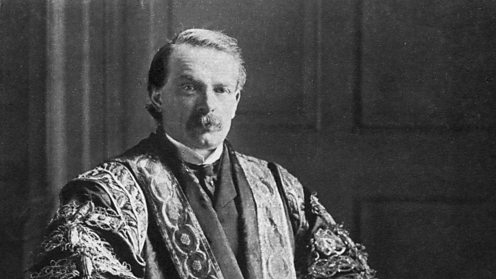
by his comments in parliament last month, Lord Burnett of Maldon (pictured)
seems to support moves by ministers to shift the balance of power in their
favour.
Our starting point must be the Conservatives’
election manifesto last year, which announced a ‘constitution, democracy and
rights commission’ that would examine the relationship between the government,
parliament and the courts and come up with ‘proposals to restore trust in our
institutions’. The Conservatives promised to make sure that ‘judicial review is
available to protect the rights of the individuals against an overbearing
state, while ensuring that it is not abused to conduct politics by another
means or to create needless delays’.
Many judges would regard that as an accurate
description of how they currently handle challenges to public decision-making.
But the lord chief justice insists that his colleagues have nothing to fear
from a reassessment of judicial review.
He first made the point in oral evidence to
the House of Lords constitution committee on 13 May. Lord Hennessy, the historian,
asked him a broad question about constitutional reform, mentioning the
government’s planned commission but not referring specifically to judicial
review.
Why does Burnett appear to be siding with
Sumption in saying the courts have gone too far?
In what could have been a reference to Gina
Miller’s Brexit-related challenges in 2016 and 2019, Burnett said quite a few
people had become ‘aerated’ about what had been going on over the past two or
three years.
‘One wants to be very careful about people who
are aerated,’ he continued, ‘but what we do need to recognise is that the
business of judicial review has grown substantially in the course of my
professional career.’ It was now ‘a completely different beast’ from what it
had been when he was called to the bar in 1980, Burnett explained.
But judicial review was a ‘construct of the
common law’, entirely judge-made. Everyone familiar with public law could
identify one or two steps that it would have been better if the courts had not
taken. Yet parliament had never intervened to regulate its substantive rules.
‘And so measured and scholarly debate about
the boundaries of judicial review is something which, in my view, is proper
when looking at constitutional arrangements,’ the chief justice said. ‘It’s not
something which the judges or the lawyers, with respect, should be frightened
of.’ Indeed, they should welcome it, he thought, provided the rule of law and
the independence of the judiciary were respected.
Burnett stressed the importance of these twin principles
in evidence to the Commons justice committee on 22 May. They were ‘irreducible
non-negotiable features’, he said. His point, presumably, was that it must
always be for the judges to interpret and apply any legislation limiting their
powers.
In the Lords, he was asked by Lord Howell of
Guildford what he made of Lord Sumption’s claims that the judges were expanding
their empire and becoming more activist. ‘Lord Sumption undoubtedly identified
a serious and significant direction of travel that the judiciary had been
engaged in, in recent years,’ Burnett replied. Because the Human Rights Act
could be used in so many areas of litigation, the courts were being propelled
into making the sort of value judgments that were alien to the ordinary
judicial review process.
Asked the same question in the Commons by John
Howell MP, Burnett expressed concern that people were confusing judicial
review, which was judge-made, with human rights challenges, where judges were
required by parliament to take account of the developing jurisprudence of the
Strasbourg court. Don’t blame us, he seemed to be saying.
Occasionally, Burnett added, he would be
updated on the government’s thinking on its manifesto promises by Robert
Buckland. ‘No doubt the lord chancellor will be in a position to say something
before long, perhaps,’ Burnett said cautiously. Plans for a royal commission on
the criminal justice process, another manifesto commitment, were ‘much less
well developed’.
What are we to make of this? Clearly, there
must be limits to judicial activism: assisted dying and transgender recognition
were examples Burnett gave of contentious issues he thought best left to
parliament. We can also see that Burnett may be less willing to allow judicial
review than some of his colleagues. In the prorogation challenge last
September, his court refused to interfere with what he regarded as an
‘inherently political’ decision by the prime minister. Less than two weeks
later, Lady Hale’s Supreme Court found the issue justiciable, overturned his
decision and granted judicial review.
But why does Burnett appear to be siding with
Sumption in saying the courts have gone too far? Is this a subtle move to blunt
the lord chancellor’s knife? Or is he trying to protect his judges from public
opprobrium by pulling them back from the precipice? Watch this space."
The original can be found here >>>https://www.lawgazette.co.uk/commentary-and-opinion/setting-the-boundaries-of-judicial-review/5104445.article